


|
|
|---|


Thursday, May 5, 2011


Monday, April 18, 2011

The California will be congenital in a new assembly band adjoining to the absolute branch at Maranello. The absolute assembly band produces 27 cars per day, or 6,000 per annum. Ferrari affairs to aftermath 5,000 Californias in the aboriginal two years of production, thereby accretion Ferrari assembly by 50% with addition of this nameplate. The California, according to abounding motoring magazines, is awash out until 2011, with 60% of buyers actuality new to the Ferrari marque.


SSC Ultimate is the fastest car today. Acceleration 0-60 km / h reached in 2.7 seconds. The highest speed of 412 km / hour. Made only 25 units. Shelby SCC is the pride of the United States supercar made in the Tri Cities, Washington. The engine capacity of 6345 liter, V-8 1183 bhp @ 6950 rpm, using a dual turbo and intercooler.
The highest speed achieved SSC Ultimate Aero obtained a certificate from Guinness World Records. NOTE: The highest speed achieved on 13 September 2007 on the highway 221, Washington. United States.
SSC Ultimate Car Pictures
Wednesday, April 13, 2011

We don't see many vehicles on the road this color, but when we do, oh man! Luke, we're sorry, but FPH is turning to the Dark Side!


Thursday, March 10, 2011
Since we've been talking about incredibly rare Porsches and old episodes of Top Gear, I thought I'd combine the two topics. Conveniently, this brings us to the most recent limited edition uber-car from Stuttgart, the Carrera GT. It just so happens to be, in my opinion, with its unique V10 whoooop whhhooooooop, the best sounding car... in the world.
I know we all dream about driving this car or one of its contemporaries, the Mclaren Mercedes SLR and Ferrari Enzo. Still more people dream of owning an exotic like this V2 rocket. However, very few understand what it takes to maintain a hyper car. Well I'm here to do my civic duty as a blogger and reblog the images of Jason Tang and words of Rowan Horncastle. Click here to see the complete list as well as more pics.


Tuesday, March 8, 2011
For many, the chance to see an insane, high-revving, Formula 1 car is coming to an end. The current 18,000 rpm 2.4 liter V8s will show their full fury for the 2011 and 2012 seasons then go the way of the Mastodon and Saber-toothed tiger. With the FIA's focus on greener technologies in racing, smaller displacement engines have constantly supplanted the previous generation. The 3.0 liter V10s gave way to the current 2.4 liter V8s and they will, in turn, fade away in favor of 1.6 liter four cylinders. However, for the first time in the modern era of F1, the consumer can truly boast about having F1 technology in their daily driver.
 |
| RB7 at adamcooperf1.com |
First, let's talk about the outgoing motors. The main reasons for dropping cylinders from the V10 era to the V8 era were fuel consumption and to make the sport safer by curbing the astronomical amounts of power that were being produced. In 2004, Ferrari was claiming 940 horsepower out of their V10 while redlining over 19,000 rpm. Now, with 3.0 liters of displacement that V10 is burning .3 liters per cylinder which is exactly the same amount as the 2.4 liter V8. So it stands to reason, assuming the majority of engine rules are adhered, that power would drop by about 20% (2 of 10 cylinders) from V10 to V8. That is exactly what happened.
 |
| F2004 at seriouswheels.com |
Since the 2.4 liter V8 is still in use, power figures aren't exactly made public. However, the 2006 motor used by Toyota is reported to have made 740 horsepower at 19,000 rpm. The 2007 season saw a reduction in the rpm ceiling by 1000 rpm to 18,000. As most gearheads know, horsepower is simply a byproduct of a mathematical formula with the only variables being torque and rpm.
 |
| Juke at sportcarbuzz.com |
So what's all this have to do with consumer automobiles? Consider the current list of engine suppliers in F1. They are Ferrari, Mercedes, Cosworth, and Renault. All except Ferrari have a good handle on small, powerful motors for both street and track applications. Also, Honda, a dominant engine supplier in the past, is reportedly readying a 1.6 liter four-cylinder turbo for its CR-Z. The most recent addition to the list of motor's throwing punches above its weight class is Nissan's MR16DDT, found in the Juke which Eric Hsu covers extensively. Remember that Nissan owns part of Renault and vice versa. Additionally, Infiniti just sponsored Red Bull in the form of "technical collaboration with Red Bull racing." This isn't to say that the motor in the Juke will power a Formula 1 car in the future but there hasn't been a smaller divide in recent memory between the applications. With the current world economy and a focus on smaller, lighter, more fuel efficient power plants, there is no reason the F1 motors can't go through the R&D process next to production motors. Sharing costs across the production and motorsport platforms would help everyone.
 |
| Lola B08/80 at ultimatecarpage.com |
A good example of this would be the Lola B08/80 in the LMP2 class of the American LeMans series which is powered by a highly tuned Mazda MZR four-cylinder. This motor in its most basic form powers the Mazda 3. In race trim, it puts out somewhere around 500 horsepower at a fraction of the cost of F1 motors. It's almost unfathomable what would be possible with Formula 1 money. Hypothetically, the necessity for lightweight and a low center of gravity could even yield V4s.
While many will mourn the death of Formula 1, changes like this are nothing new. The sport is constantly trying to reinvent itself whether its in reaction to global or political concerns or simply to improve "the show." It's time to embrace the sport for its practical engineering prowess and technological advances. Imagine the possibilities.
Thursday, February 17, 2011
You'd hardly expect Ferrari to be absent from a list of the most powerful cars of all time. This manufacturer's fantastic catalogue of cars makes it an obvious choice to include the Prancing Horse in our top five. With an astonishing 612bhp on offer, the Ferrari 599 GTB can reach amazing speeds of up to 205 miles per hour, while also reaching 62mph from zero before four seconds are up. The 599 GTB looks as amazing as any other Ferrari, in addition to offering the kind of speeds that you would normally only dream of. A big garage would be handy, however, if you don't want pigeons and prying eyes near its gorgeous bodywork.

 Ferrari 599 GTB Fiorano (internal code F139) is Ferrari's 2-seat Gran Turismo flagship model, replacing the 575M Maranello in 2006 as a 2007 model. The 599 GTB debuted at the Geneva Motor Show on February 28, 2006. Styling of the 599 GTB was handled by Pininfarina, under the direction of Ferrari stylist, Frank Stephenson. It is named for its total engine displacement (5999 cc), Gran Turismo Berlinetta nature, and the Fiorano Circuit test track used by Ferrari.
Wednesday, January 19, 2011
For those that think an Aston Martin DB5 or a Shelby Cobra aren't rare enough, here are two cars from the 50s that would satisfy those extravagant connoisseurs.


Scarab Replica - Video - Jay Leno's Garage
Scarab Motorsports
Tuesday, January 18, 2011
Many people consider the Ferrari 458 to be the pinnacle of automotive excellence. It is the ultimate in high performance, vehicular perfection. With its combination of active aerodynamics, lightweight exotic materials, a horsepower dense power plant, and lightning fast transmission, this car sits at the top of the evolutionary charts. Although for the everyday enthusiast like myself, it marks the end of an era that many people never really got to appreciate...
 |
| deshow.net |
Turning sixteen (in most parts of the country) is the biggest day in a young enthusiasts' life. The world is full of new possibilities all thanks to one little card with your picture on it, your driver's license. For me, this meant the ever increasing challenge of perfecting my driving abilities. It didn't matter if it was learning how to negotiate a blizzard in order to get to the grocery store or clipping a late apex on a decreasing radius on-ramp to find my gap in the flow of traffic. One of the easiest tasks to accomplish but hardest to master for any driver is the manual transmission. For every perfectly smooth take-off from a light, there are a handful of smoky burnouts and a single glorious sounding rev-matched downshift for every half dozen jerky gear changes. Those are the times that inspire us to stick with it (no pun intended).
 |
| about.com |
 |
| automobilemag.com |
 |
| seriouswheels.com |
Whether we like it or not, dual clutch transmissions are here to stay. I just hope that automakers can see that they will lose a percentage of enthusiasts to competing marques if they don't offer proper manuals. If this isn't the case, the next generation of drivers might as well be born without opposable thumbs.
Monday, January 17, 2011
Remembering the 'Aviator', Gilles Villeneuve January 18, 1950 – May 8, 1982
0 comments Posted by blogg at 9:01 PM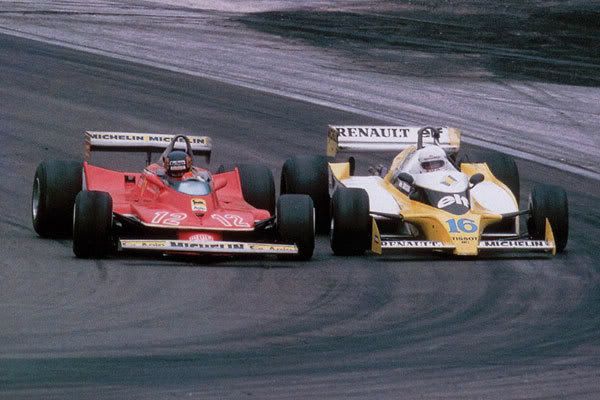
“Only Villeneuve could have made that happen,” Arnoux said. “I had confidence because it was Gilles. I would never have tried to fight so ferociously with any other driver... The duel with Gilles is something I'll never forget, my greatest souvenir in racing.”


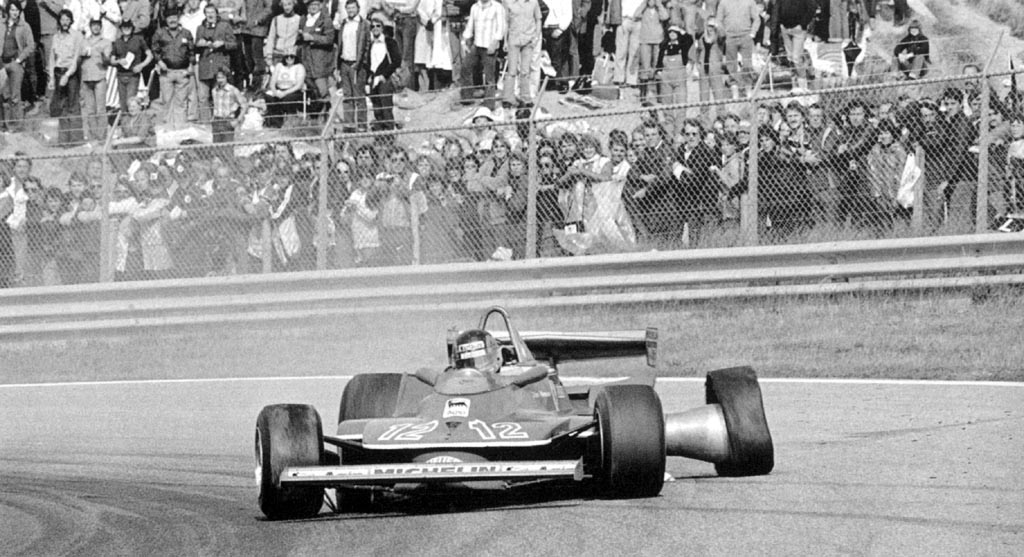
He was nicknamed the 'Aviator' because at the start of his Formula 1 career the Ferrari race cars he was driving took flight so often. Thus, race after race, Gilles Villeneuve became a personality before he became a winner. Enzo Ferrari, who had practically bet blindfolded on Gilles, gave him his confidence and was rewarded. Gilles soon established himself as one of the fastest drivers of all time, won several races and came close to the world title, but he remained what he was: a born fighter, the racing driver who never gave up, who would fight for first place, but also for second-last, with the same determination and the same look of a somewhat 'difficult,' rather ingenuous boy, that was unusual among great drivers. Millions of people admired him, loved him and finally mourned him when a last terrifying flight into the air, at the end of practice for the Belgian GP, took him away forever on May 8, 1982.
 |
| *no photographs of the fatal crash are posted. |


“Only Villeneuve could have made that happen,” Arnoux said. “I had confidence because it was Gilles. I would never have tried to fight so ferociously with any other driver... The duel with Gilles is something I'll never forget, my greatest souvenir in racing.”


