


|
|
|---|


Saturday, April 16, 2011
McLaren Design Car | F1 McLaren | Formula 1 Design | McLaren Design F1
 |
| Formula 1 McLaren Design |
 |
| Car F1 : McLaren Design View Side |
 |
| McLaren Design for Formula 1 |
Thanks for visiting aoutomotive modifications >> F1 Cars-McLaren Design, please leave your impression friends...
Tuesday, March 22, 2011








Thursday, March 10, 2011
Since we've been talking about incredibly rare Porsches and old episodes of Top Gear, I thought I'd combine the two topics. Conveniently, this brings us to the most recent limited edition uber-car from Stuttgart, the Carrera GT. It just so happens to be, in my opinion, with its unique V10 whoooop whhhooooooop, the best sounding car... in the world.
I know we all dream about driving this car or one of its contemporaries, the Mclaren Mercedes SLR and Ferrari Enzo. Still more people dream of owning an exotic like this V2 rocket. However, very few understand what it takes to maintain a hyper car. Well I'm here to do my civic duty as a blogger and reblog the images of Jason Tang and words of Rowan Horncastle. Click here to see the complete list as well as more pics.


Tuesday, January 25, 2011
Look down at your center console (now at me, now back to your console...damn Old Spice commercials). I bet there's at least 3 things that you notice right away. There's the shifter, a cup holder probably, and the hand brake. This last item goes by many names. There's hand brake, parking brake, and emergency brake, or e-brake for short. I've decided that e-brake will from now on mean "enthusiast brake." Let me explain after the jump.
 |
| My Mazdaspeed 3 |
This is a picture of the three most important hand controls in a car. The steering wheel...er... steers. The shifter transmits power from the motor to the wheels. For normal people, the e-brake prevents the car from aimlessly wandering into some negative circumstance. However, the e-brake is an enthusiast's Leatherman multi-tool.
Now, I don't condone anything that I'm about to tell you. I'm just saying that certain people do, in fact, use the e-brake for these reasons. These might include e-brake drifts, j-turns, and front-wheel drive burnouts.
As enthusiasts, we are proud that we can make a car dance around corners and control its every movement. The e-brake simply aids in the festivities. Soon, these stop sticks will be replaced by something like this:
 |
| Audi parking brake |
 |
| Mercedes E-Class |
 |
| MP4-12C worldcarfans.com |
Wednesday, September 8, 2010
The McLaren F1 is a sports car designed and manufactured by Gordon Murray and McLaren Automotive. On 31 March 1998, it set the record for the fastest production car in the world, 240 mph (391 km/h).[1] As of April 2009, the F1 is surpassed by only four other production cars in sheer top speed, but is still the fastest naturally aspirated production car.
 best maclaren f1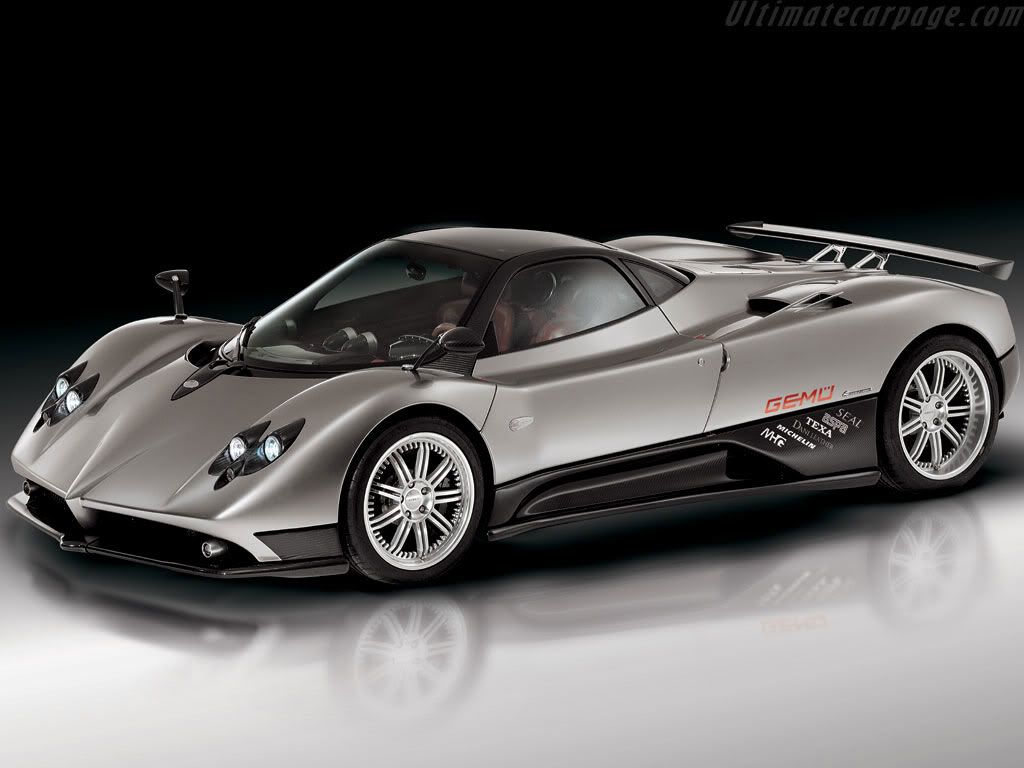
 mclaren f1 open doors
 mclaren f1
Sunday, July 4, 2010
... almost always look like a naked woman lying on her stomach about to get up." -unknownI would have gladly taken credit for this quote, but let's face it, we all know it was said by someone much more brilliant. If any of you know of its origin, feel free to leave a helpful comment.
Every once in a while, your favorite car magazines will do a cover on what they've nominated as the most beautiful cars in the world. 90% of the time, they've somehow managed to let you down by either not including one of your favorite cars or by putting in a car that you just don't care for. Unfortunately, this may happen here too. If you really want a list that meets your expectations, it'd be easier if you just created your own.
Anyway, back to me. I imagine that industrial design may be one of the most creativity prohibiting fields within design. Oftentimes, designs are dictated by the boring philosophies of practicality and functionality. You've all heard the phrase "form follows function," yes?
Even so, the humble automobile that started out as a tool for transportation, has become something that has transcended to lifestyle, culture, and won the affections of many.
Affection is wonderful. Affection has given upright utility a sprinkling of the irrational. But with a little extra addition of passion (Italian or otherwise), the flood gates opened and we witness the evolution of modern car design.
Through the decades, specifically starting in Europe and the United States during the late 1930's, one shape overcame the test of time and became the shape we have all universally agreed upon as beauty.
A common misconception has been that the most important part of a car is its engine.

Take this picture of an 1918 Peugeot for instance. It suggests to me that it is as powerful as a locomotive, dramatically displays the immensity of its engine. All else is an afterthought.
Later, a new philosophy stated that, in fact, the most important part of the car is its contact points to the road-- the wheels and tires. Car design paid close attention, and eventually devoted attention, to incorporating fenders that cover the wheels and suspension for better protection, aerodynamic fluidity and, of course, aesthetics.

 1935 Duesenberg SJ Speedster
 1938 Alfa Romeo 8C 2900
Italian "Pontoon"

 1949 Mercury Coupe
American "Character Line"
This design pursuit gave fruit to two key design cornerstones. The "pontoon fender" and the "character line." The majority of later design exercises have always been a combination of the two in varying degrees.
 1955 Porsche 550 Spyder
 1957 Ferrari Testa Rossa
 1963 Ferrari 250 GTO
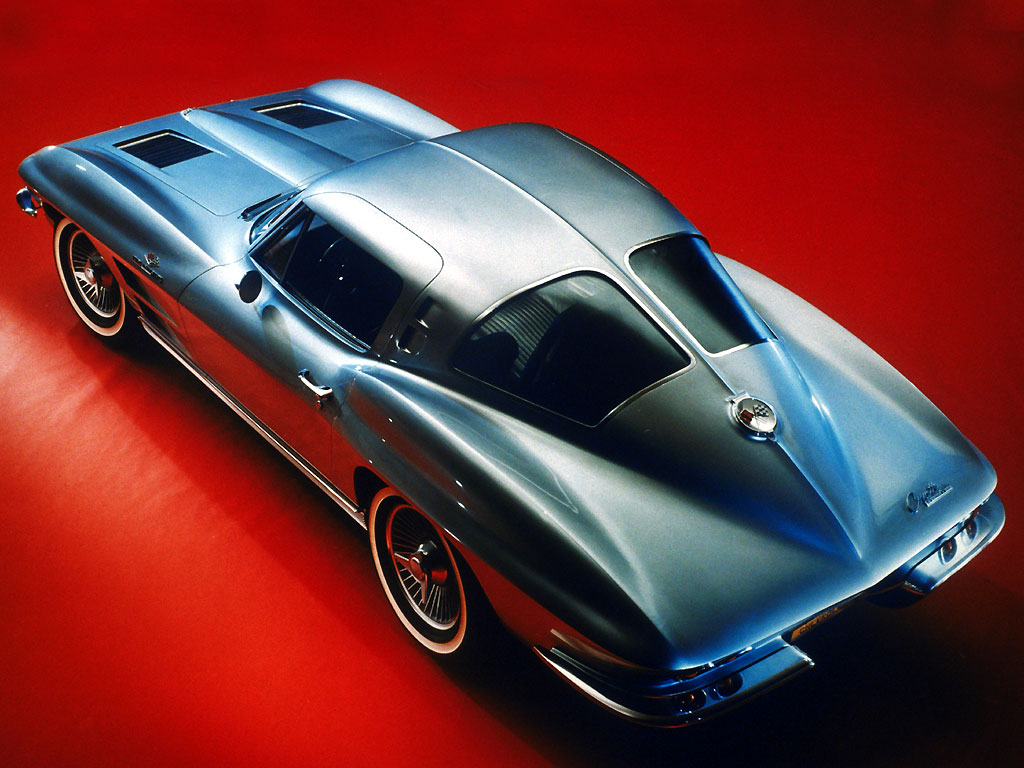 1963 Chevrolet Corvette Stingray Coupe
 1968 Ford Mustang GT Fastback
Approaching the late 1960s, we enter the golden age of Italian car design and engineering.
Yes you guessed it, the result is a car that looks like a naked woman lying on her stomach.
Through it all, the philosophy from the 1930s remained true in the 1960s-- wheel fender arches are even more aggressively exaggerated, the engine still bulges through the bonnet.
Another notable event happened in the 1960s. A small Italian automaker was founded in the once quiet town of Sant'Agata Bolognese. You may recognize the name from their more recent efforts; Diablo, Murcielago, Gallardo. But in 1966, Lamborghini created their genesis, the very first mid-engined V12 Lamborghini. The Miura.
A sword has two edges, however. In the 1960s, car manufacturers were still in the experimental phase of aerodynamics and many were yet to master wind tunnel techniques. What does this mean? The rule of thumb for designers became, "if it looks slippery, then it is slippery."
 1967 Lamborghini Miura
 1968 Alfa Romeo Tipo 33 Stradale
 1968 Ferrari Dino
 Porsche 917
 Ferrari 330 P4
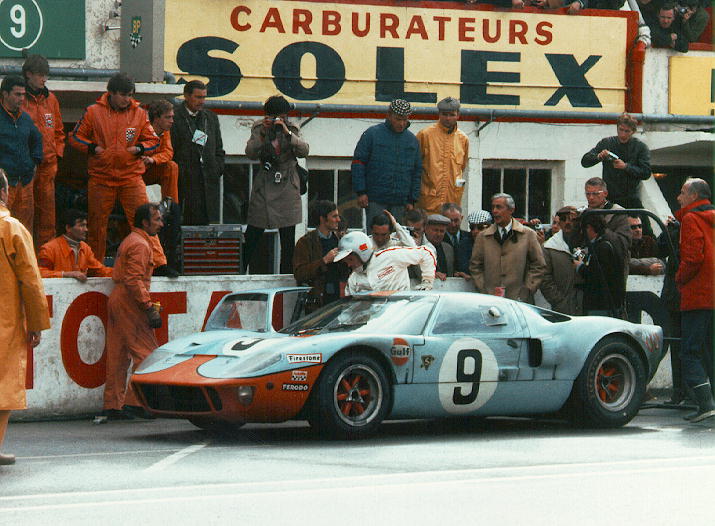 Ford GT40
1990s Britain's decade of Magnificence. The wind tunnel's path of enlightenment.
 Jaguar XJ 220
 McLaren F1
 Aston Martin DB7
2000s
 Porsche Carrera GT
 Ferrari F430
 Aston Martin DB9
 Alfa Romeo 8C Competitzione
 Porsche Cayman S
Nonetheless, I am very amazed at how far and how successful the original Italian Pontoon and the American Character line have developed and evolved while still staying very true to its original intention.
Thank you all for reading this incredibly long post. In a century, there have been millions of cars that have been created so naturally there are numerous cars that have captured our hearts and inspired us.
To the Lotus race car fans, and Lancia Stratos fanatics, Acura NSX tuners, Rolls Royce connoisseurs and yes, even you BMW playboys, I have not forgotten about the contributions your cars have provided but I just couldn't have possibly done them all.


