|
|
|---|


Saturday, September 18, 2010

These carbon vents are pretty gaudy, aren't they? Why would we ever need vents made out of carbon fiber? If you really want to make your car lighter, might you consider completely removing air conditioning instead?
Okay no, maybe not. I’m sure I wouldn’t want my sweaty butt B.O. smell to bake inside my hypothetical $225k Italian sports car either.

It may not seem like it to you, but I do appreciate carbon fiber. The weaves are seriously cool. And especially from a technological standpoint, it’s almost magic. If I could travel back in time and show alchemists this miracle material, I wouldn’t be surprised if they forget all about turning lead into gold.
Unfortunately, the trend with carbon fiber is men believe they have to have it in order for their cars to be any better. The marketing folk understands that especially. That's why they show no shame when they vomit out unnecessary applications and accessories. There are plenty of people who take the bait.

Take this: Carbon fiber cup holder trim? Seriously?? Just how many grams will you take off of your car’s curb weight? Did you actually gain a lower center of gravity?
We have got a better idea for you. Don’t even bother with cup holders at all. Go on your own little diet. Lose some weight. Empty the change from you pockets, wear a thinner shirt, buzz your hair, shave your beard. Hell, manscape.
There are cars where carbon fiber should be the least of its concern-- the Bentley Continental Supersports, for example. The “base” Continental GT, if a hand built car can ever have a “base” model, costs around $180k.

A bump in horsepower and a two hundred pound weight saving raises the price by approximately another hundred grand, slotting itself into DB9/ 599 GTB territory.
Is it suddenly a weapon for the track? No. The spec numbers still mark it at 4939 lb., comparable to the weight of a million elephants. It tells me that no amount of carbon fiber will hide what it was always meant to be— a torque monster long distance GT car, a coachwork orgy of rich leathers, burled wood, aluminum switches, and the trademark Breitling analog clock on the center console.
I’ve always liked that about Bentleys, anyway.
Look, the fact of the matter is that we have to admit what's right and leave carbon fiber for the real hypercars and sports cars-- Pagani Zonda, Lamborghini Superleggera, Ferrari Challenge, etc.
Even then, few of us will ever drive these vehicles to limits where we truly cannot do without the car's carbon fiber weight and rigidity characteristics. I know I never will.
For the record, though, why yes, I would take the Aston over the Supersports and the GTB, thank you very much.

As a matter of fact, the DB9 is the prime example of why a car really does not have to throw carbon fiber around to shout about itself. Its cabin is just a gem to sit in and the true sense of occasion comes from… well, from the fact that it’s an Aston Martin.
It's possible I can be mistaken. Perhaps the DB9 does have some mechanical bits or panels that are carbon fiber. I can’t be positive and I haven’t a clue where the bits could be. Honestly, I don’t care and I can't be bothered to research it on Google. The point here is Aston Martin made sure not to make carbon fiber a hallmark in presenting the DB9. Such a suggestion actually distracts you from the real reason why the car is so desirable. The car is more than the sum of its parts.
Hm, “more than the sum of its parts.”
Think about that the next time you think your sports car needs to have that carbon fiber trim that includes carbon vanity mirror covers.
Wednesday, August 18, 2010
You prefer feeling secure? Go buy a wittle puppy. Porsche understands this.
Danny Chin and I rarely agree on all things Porsche (pronounced Poor-sha!). I remember a particular conversation we had where I was convinced, unfounded or not, that a 911 is a car that is truly befitting of my character… to which Chin responded with a Jezza-like remark, “Because of its ass-backwards engineering?”

 | |
| courtesy of Autoblog |
 | |
| Courtesy of Autotribute |
Friday, July 30, 2010
To start, Bugatti Veyron is a noun.
From there, things are going to get a bit complicated.. Or, dare I, things get a bit nonsensical.
 |
| Bugatti Veyron Gran Sport |
We begin describing the Bugatti with numbers. Let's get started with the price first, something you should all feel more comfortable with understanding. It is a cool $170,576.90.
Wait, something isn't right... Oh no! I'm sorry, how embarrassing-- I accidentally moved it to the wrong decimal place. The starting price for a Bugatti Veyron is, in fact:
I repeat, One Million Seven Hundred and Five Thousand Seven Hundred and Sixty Nine US Dollars. And get this, the company is still losing money for every car sold.
That's not all. The latest special edition Veyron Super Sport is said to be, according to New York Time's Wheels column writer, John Pearley Huffman (I did not make any of this up), priced at $2.5 MILLION!!!!!!! I'll give you a moment to let that settle in.
But it's true, isn't it? You should always get what you pay for. So what's so special about this car, then, that it has the audacity to charge a price that is even greater than the stimulus amount granted to the schools of Orange County, California?
The first question we should ask when it comes to sports cars like the Bugatti is, "How fast does it go?"
We know it's more than 250mph, but how much is that really? The Veyron can out-accelerate a cheetah to 60mph, reach a higher top speed than a Boeing AH-64 Apache Gunship Helicopter used by our Navy and, in a very interesting 2-mile drag race, it is also a very competent adversary against the British Royal Air Force Eurofighter Typhoon.
I mean seriously, a W16 cylinder quadturbo engine?! When I first heard of those numbers, i nearly crapped my pants. The Veyron would crap itself too if it didn't have ten radiators, only four of which are for the engine itself, to cool off.
 |
| No, she is not a midget nor is this photoshopped. Just accept that everything about this car is staggering and completely defies logic. |
In spite of all the logic that it defies, we see that this car does exist for a purpose. The Veyron exists to be the fastest, most powerful, and most expensive production automobile in history. When the just-as-ugly Ultimate Aero SSC TT 123ABC decided to challenge the seat for top speed king, Bugatti Veyron answered back by doing what it does best, introducing the Veyron Supersport. It's even faster, even more powerful, even more ludicrous and twice as expensive as the original.
In the last episode of Top Gear (half of you readers probably saw it before I had a chance to), presenter James May gave it a go in the Veyron SS. Upon hitting the magic number, attaining the Veyron SS' terminal velocity of 417.9 kph (259.7 mph), Bugatti sent their factory test driver to take the car out again to do two runs, one at each direction of their oval test track, to average a top speed of 267mph. Now just to be clear, that's a total of three maximum speed runs in a span of one afternoon and this car just kept on going.
But I hate them for it.
On one hand, I am more than impressed by the monumental engineering. The undertaking of such a vehicle is immense and in car terms, comparable to a Saturn V rocket or CERN Large Hadron Collider project. Unfortunately, on the other hand, I feel like all this marvel is always going to be in the hands of people that least deserve it:
Sunday, July 4, 2010
... almost always look like a naked woman lying on her stomach about to get up." -unknownI would have gladly taken credit for this quote, but let's face it, we all know it was said by someone much more brilliant. If any of you know of its origin, feel free to leave a helpful comment.
Every once in a while, your favorite car magazines will do a cover on what they've nominated as the most beautiful cars in the world. 90% of the time, they've somehow managed to let you down by either not including one of your favorite cars or by putting in a car that you just don't care for. Unfortunately, this may happen here too. If you really want a list that meets your expectations, it'd be easier if you just created your own.
Anyway, back to me. I imagine that industrial design may be one of the most creativity prohibiting fields within design. Oftentimes, designs are dictated by the boring philosophies of practicality and functionality. You've all heard the phrase "form follows function," yes?
Even so, the humble automobile that started out as a tool for transportation, has become something that has transcended to lifestyle, culture, and won the affections of many.
Affection is wonderful. Affection has given upright utility a sprinkling of the irrational. But with a little extra addition of passion (Italian or otherwise), the flood gates opened and we witness the evolution of modern car design.
Through the decades, specifically starting in Europe and the United States during the late 1930's, one shape overcame the test of time and became the shape we have all universally agreed upon as beauty.
A common misconception has been that the most important part of a car is its engine.

Take this picture of an 1918 Peugeot for instance. It suggests to me that it is as powerful as a locomotive, dramatically displays the immensity of its engine. All else is an afterthought.
Later, a new philosophy stated that, in fact, the most important part of the car is its contact points to the road-- the wheels and tires. Car design paid close attention, and eventually devoted attention, to incorporating fenders that cover the wheels and suspension for better protection, aerodynamic fluidity and, of course, aesthetics.

 1935 Duesenberg SJ Speedster
 1938 Alfa Romeo 8C 2900
Italian "Pontoon"

 1949 Mercury Coupe
American "Character Line"
This design pursuit gave fruit to two key design cornerstones. The "pontoon fender" and the "character line." The majority of later design exercises have always been a combination of the two in varying degrees.
 1955 Porsche 550 Spyder
 1957 Ferrari Testa Rossa
 1963 Ferrari 250 GTO
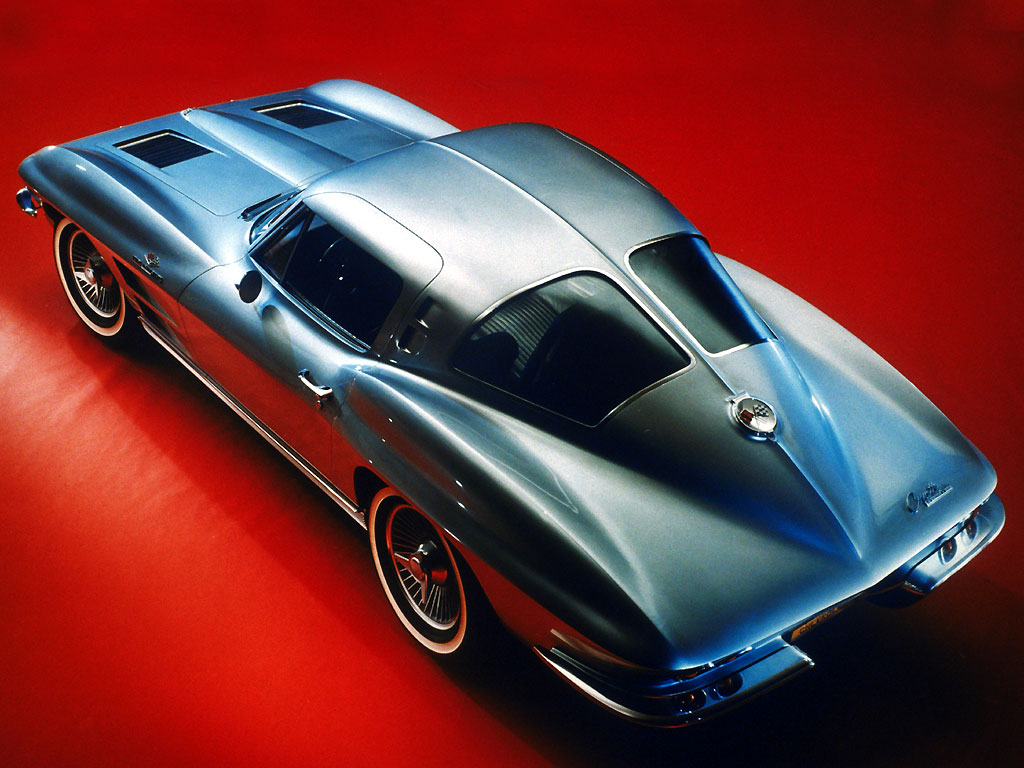 1963 Chevrolet Corvette Stingray Coupe
 1968 Ford Mustang GT Fastback
Approaching the late 1960s, we enter the golden age of Italian car design and engineering.
Yes you guessed it, the result is a car that looks like a naked woman lying on her stomach.
Through it all, the philosophy from the 1930s remained true in the 1960s-- wheel fender arches are even more aggressively exaggerated, the engine still bulges through the bonnet.
Another notable event happened in the 1960s. A small Italian automaker was founded in the once quiet town of Sant'Agata Bolognese. You may recognize the name from their more recent efforts; Diablo, Murcielago, Gallardo. But in 1966, Lamborghini created their genesis, the very first mid-engined V12 Lamborghini. The Miura.
A sword has two edges, however. In the 1960s, car manufacturers were still in the experimental phase of aerodynamics and many were yet to master wind tunnel techniques. What does this mean? The rule of thumb for designers became, "if it looks slippery, then it is slippery."
 1967 Lamborghini Miura
 1968 Alfa Romeo Tipo 33 Stradale
 1968 Ferrari Dino
 Porsche 917
 Ferrari 330 P4
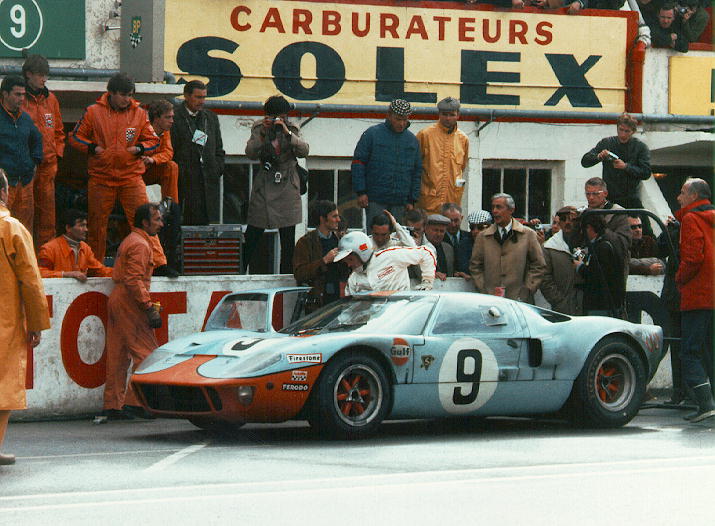 Ford GT40
1990s Britain's decade of Magnificence. The wind tunnel's path of enlightenment.
 Jaguar XJ 220
 McLaren F1
 Aston Martin DB7
2000s
 Porsche Carrera GT
 Ferrari F430
 Aston Martin DB9
 Alfa Romeo 8C Competitzione
 Porsche Cayman S
Nonetheless, I am very amazed at how far and how successful the original Italian Pontoon and the American Character line have developed and evolved while still staying very true to its original intention.
Thank you all for reading this incredibly long post. In a century, there have been millions of cars that have been created so naturally there are numerous cars that have captured our hearts and inspired us.
To the Lotus race car fans, and Lancia Stratos fanatics, Acura NSX tuners, Rolls Royce connoisseurs and yes, even you BMW playboys, I have not forgotten about the contributions your cars have provided but I just couldn't have possibly done them all.
Sunday, December 6, 2009
Even as you are reading this sentence right now, without me having to even begin the topic, I am willing to bet that you already know where this post is going.
Fellow car enthusiasts, we are fans of innovation. We appreciate the importance of our engineers and their forward thinking, providing us with automobiles that are more accessible, more practical, and safer on the limit.
Computer chips kick in, calculating all sorts of algorithms, feeding off of sensory devices across every parameter of the car. This effectively narrows the gap between the amateur weekenders and the abilities of a professional race car driver. Yes, fat man, even you can look like a hero behind the wheel of the modern Ferrari 430. One of the more recent devices that have been implemented onto modern race cars are the sequential gearbox. This technology has become a staple. Whether the discipline is Formula 1 or WRC, cars are fitted with this device that promises quicker shifting and efficient ergonomics. It has become so popular, in fact, that it has become a symbol of cutting edge performance.
But here lies the rub, ladies and gentleman. Car companies see this as an opportunity to please consumers that are conscious for performance. German motor companies are the largest offenders of all-- VW mates the sporting version of their bread and butter Golf to their trick DSG twin clutch transmission. [displeasure with what German motor companies do aside, I am a huge fan of the new GTI] But let me explain the reason of my displeasure. The sequential, or flappy paddle gearboxes, are robbing our driving experience. The bond between a proper manual gearbox and a sports car is eternal. The tactile feel satisfies every sensory organ in our body-- the touch of the shifter, the weight of the clutch, the engines noise during a perfect rev match, the smell of gasoline, liking what you see as you grin and glance at yourself from the rear view mirror.
::glances at the review mirror:: "Danny Choy, you are one bad ass muthafuka."
The bottom line is that the relationship between man (or woman) and machine cannot be reproduced by any other sort of transmission. The arguably more efficient gearbox will win races, sure. But when you are buying yourself a car for pleasure, let me be the one to warn you against the hype.
Oh, won't bother with what I've said? So be it! Just don't blame me for calling you a "flappy paddle head" when you come crying back to me after you've realized your gearbox has betrayed you.

Automatic vs. Semi-Automatic vs. Manual pt. 1
Automatic vs. Semi-Automatic vs. Manual pt. 2
[credit to alernest, who provided YouTube with these select scenes from BBC show Top Gear and 5th Gear]
-Danny Choy-